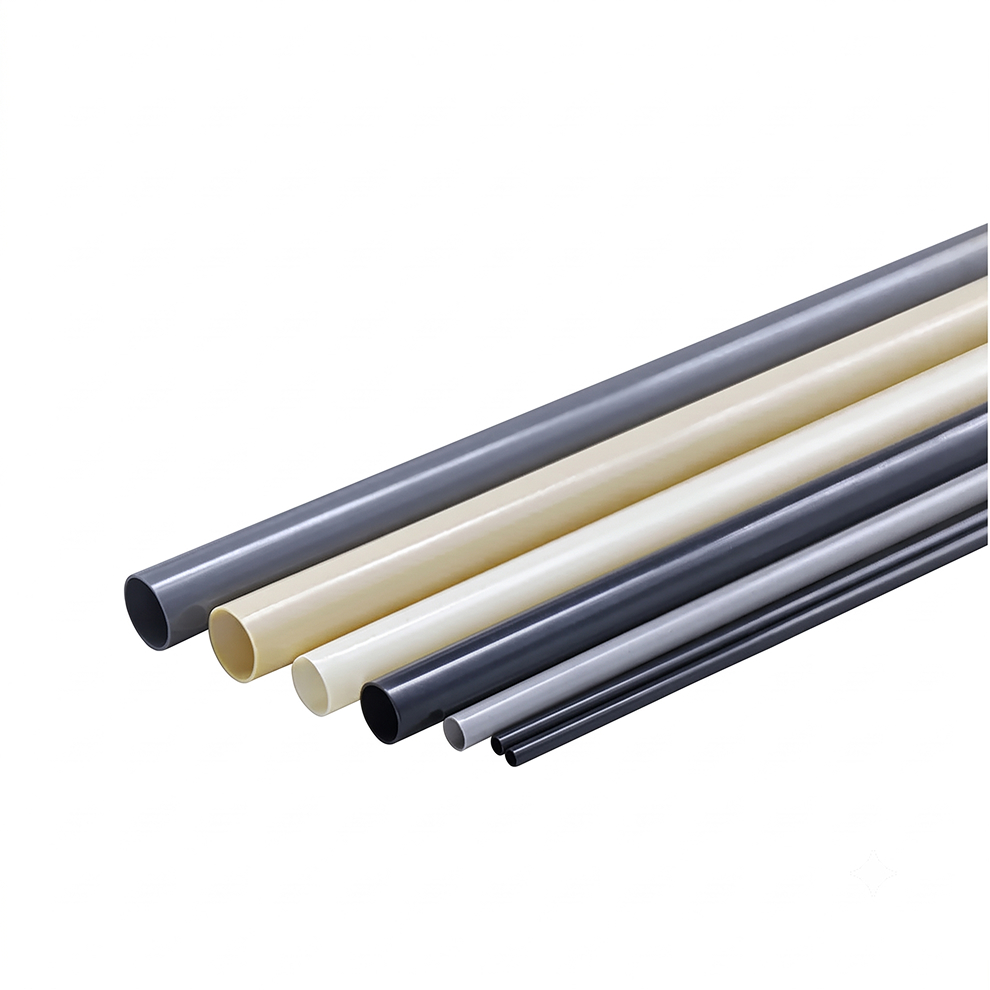
Why PEEK has an advantage
- No plasticizers or leachable additives, and BPA-free
- Chemically stable, holding up well to body fluids and disinfectants
- Modulus of about 3.6 GPa — far closer to bone than titanium (about 110 GPa), so less stress shielding
- Radiolucent, so it creates no imaging artifacts
- Properties retained through repeated autoclave and gamma sterilization
ISO 10993 — what gets tested
ISO 10993-1 sets the required tests by where the device touches the body and for how long. Contact duration is split into 24 hours or less, up to 30 days, and more than 30 days; contact type into surface contact, externally communicating (blood path or tissue) and implant.
A PEEK material's record of passing cytotoxicity, sensitization and irritation tests is good evidence, but it does not replace evaluation of the finished device. The risk assessment is redone on the finished product after processing and assembly.
USP Class VI and material grades
USP Class VI is a screening test used at the material stage. It is useful for choosing medical materials but does not by itself substitute for device approval. Material grades fall broadly into industrial, short-term-contact medical and long-term implant; implant uses call for a grade whose supplier has filed documentation with regulators that can be referenced.
Processing changes biocompatibility
The same PEEK can give different results depending on pigments, release agents, cutting fluids and cleaning residues. Using only the additives you need, keeping a list of every substance the process touches, and validating the cleaning step are how you keep the evaluation burden down.
Sterilization
PEEK's glass transition is about 143 °C, so shape and properties hold through repeated 134 °C autoclave cycles. It also stands up to gamma and EtO sterilization. In an assembled device, though, other components hit their limits first, so choose the method for the device as a whole.
If you need visibility
PEEK lets X-rays through, so it does not show on imaging. If position must be confirmed, use a radiopaque grade filled with barium sulfate or add metal markers. The radiopaque filler is also part of the biocompatibility evaluation.
Octudex supplies PEEK tubing, heat shrink tubing and molded and machined parts made from medical-grade material, and can check the material test documentation with you on request.