2026.09.23Process

PET vs FEP heat shrink — the one that stays and the one you peel

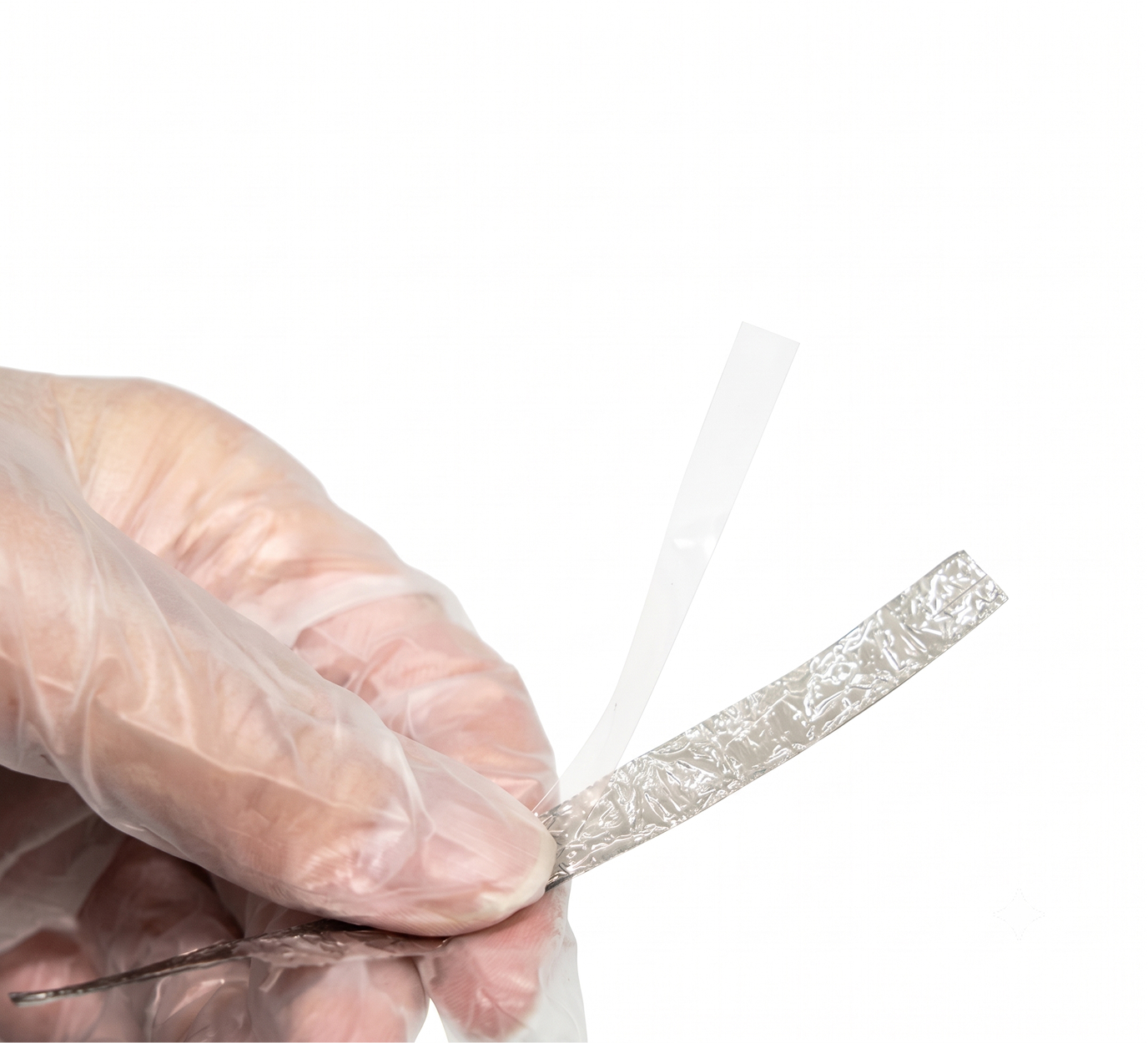
Both are called heat shrink but they do opposite jobs. PET stays on the device for insulation, protection and bundling; FEP presses the jacket during braided-shaft reflow and is peeled away. It is also the item we get the most second-source inquiries about.

Heat shrink tubing before and after recovery
Expanded and recovered
ItemPET heat shrinkFEP heat shrink
RoleStays on device — insulation, protection, marker fixing, bundlingProcess aid — removed after reflow
Wall0.0127 mm (0.0005″) class, 0.013–0.015 mm0.1–0.3 mm
Shrink ratio1.5:1 · 2:11.3:1 · 1.6:1
Recovery temperatureabout 85–190 °Cabout 190–215 °C (with jacket melt)
Typical spec exampleExpanded ID 1.3 → recovered 1.2 mm · wall 0.013 · L 1,300 mmShaft OD + clearance, length = shaft length
DocumentsMSDS and biocompatibility often requiredMSDS (not part of the device)

PET — what to write when qualifying a second source

  • Expanded ID and recovered ID (e.g. 1.3 → 1.2 mm; mixed notation like OD 1.5 → recovered ID 1.0 mm is fine)
  • Expanded wall — state it if you need the 0.0127 mm class; a thicker wall changes OD
  • Length (800 · 1,300 mm etc.) and quantity (samples from 100 pcs)
  • Medical grade and documents needed — MSDS · biocompatibility · sterilisation compatibility

FEP — it sets the OD in reflow

Slide a jacket (Pebax · TPU) over the braid, cover with FEP heat shrink and heat: the jacket melts into the braid and the FEP defines the OD. The final OD of a braided tube is therefore set by the FEP recovered ID. For a fixed-OD spec like 4.9 Fr, the FEP size must be reviewed together.

Other heat shrink materials

PTFE (2:1 · 4:1, high temperature), PFA (clear, heat resistant), PVDF (thin and stiff), PE (general 2:1), Pebax (same material as the jacket) and PEEK (high temperature, high stiffness) are also supplied. Recovery temperature and ratio per material are on each product page and TDS.

More technical notes

More Notes
All technical notes →
2026.09.15A guide to CNC machining medical PEEK2026.09.09Catheter design guide — material, layers, tolerance2026.09.02PEEK biocompatibility — what an engineer should know2026.08.20Medical PI tubing — seven things an engineer should check
Contact

Send us a specification
and we answer feasibility first

Dimensions, material, application. Those three are enough to start. A drawing makes it faster.

grit@octud.com010-3338-2976
01Dimensions — OD / ID / wall, or Fr
02Material · whether a grade is specified · tolerance
03Application · secondary processing · expected volume
Support in Korean and English · drawings welcomeSend an inquiry