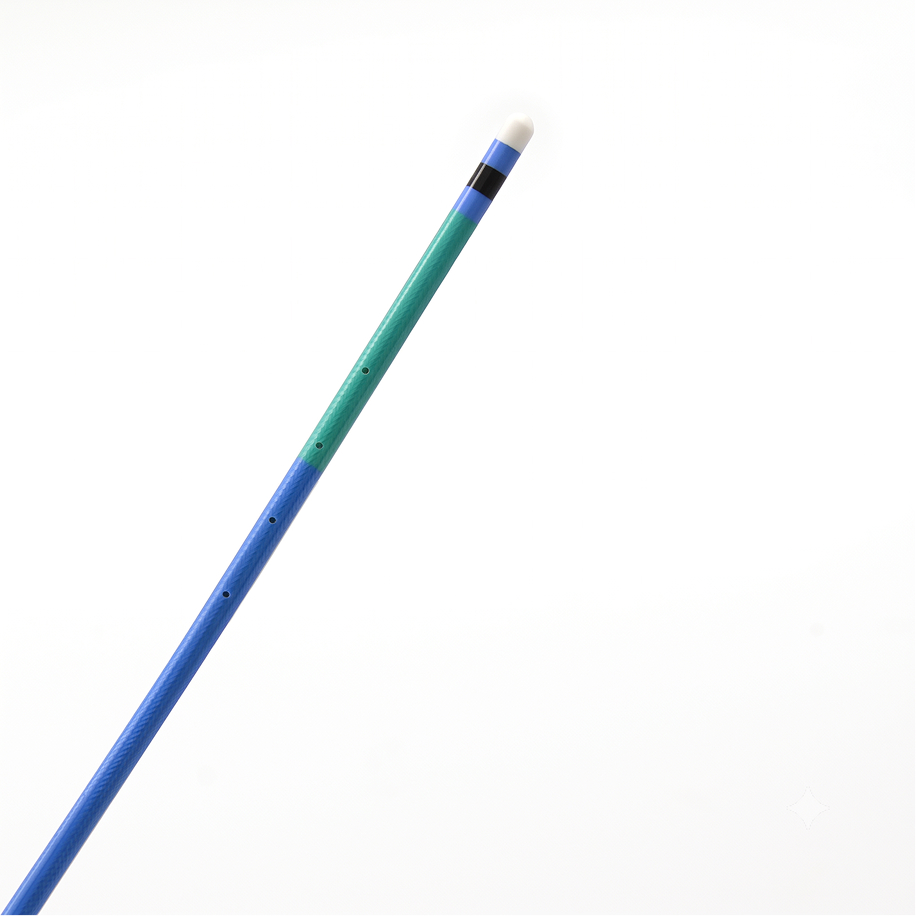
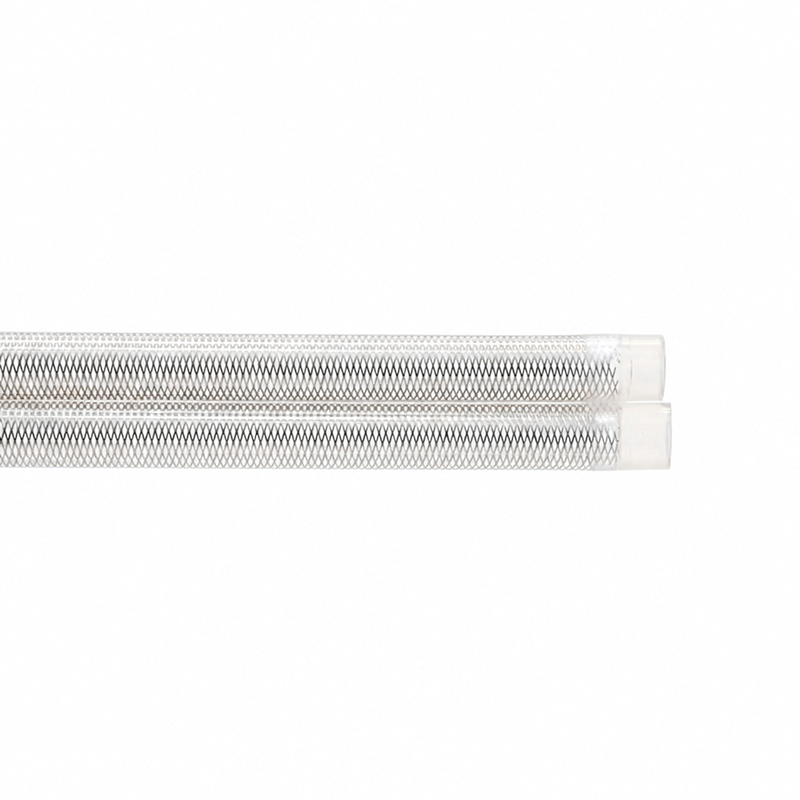
Braid reinforced tubing is built by co-extrusion or reflow, embedding a metal or fibre braid between two layers of material. That structure lifts burst pressure resistance, column strength and torque transmission together. Braid angle, coverage and the reinforcement's size, shape and strength decide how the tube performs.
Suited to coronary, electrophysiology, structural heart, peripheral, neurological, urological and respiratory work. It shows up wherever torsional control matters — microcatheters, aortic valve delivery systems, EP mapping catheters, steerable sheaths and guiding catheters.
16 carriers means 16 bands; 2-wire means two wires side by side per band. Specify pattern (1×1 · 2×2) and PPI as well.
PTFE liner 0.025 + wire 0.025 + jacket 0.012 + 0.02 mm resin fill in the braid. If OD is fixed, marker band thickness (0.025 mm) and braid pattern are adjusted. The jacket wall is set by FEP shrink during reflow, so we review against final OD.
Yes. TDS · MSDS come with every specification reply. ISO 10993 biocompatibility data varies by grade and lot, so we confirm it with the factory (Linstant) and reply.
Standard sizes start with small sample lots. MOQ and lead time depend on dimensions, material and secondary processing — send OD · ID · wall · tolerance · length · quantity and we reply within one business day.
Inner diameter, wall thickness, length and operating environment — those four settle the item. We reply with TDS, MSDS and MOQ.