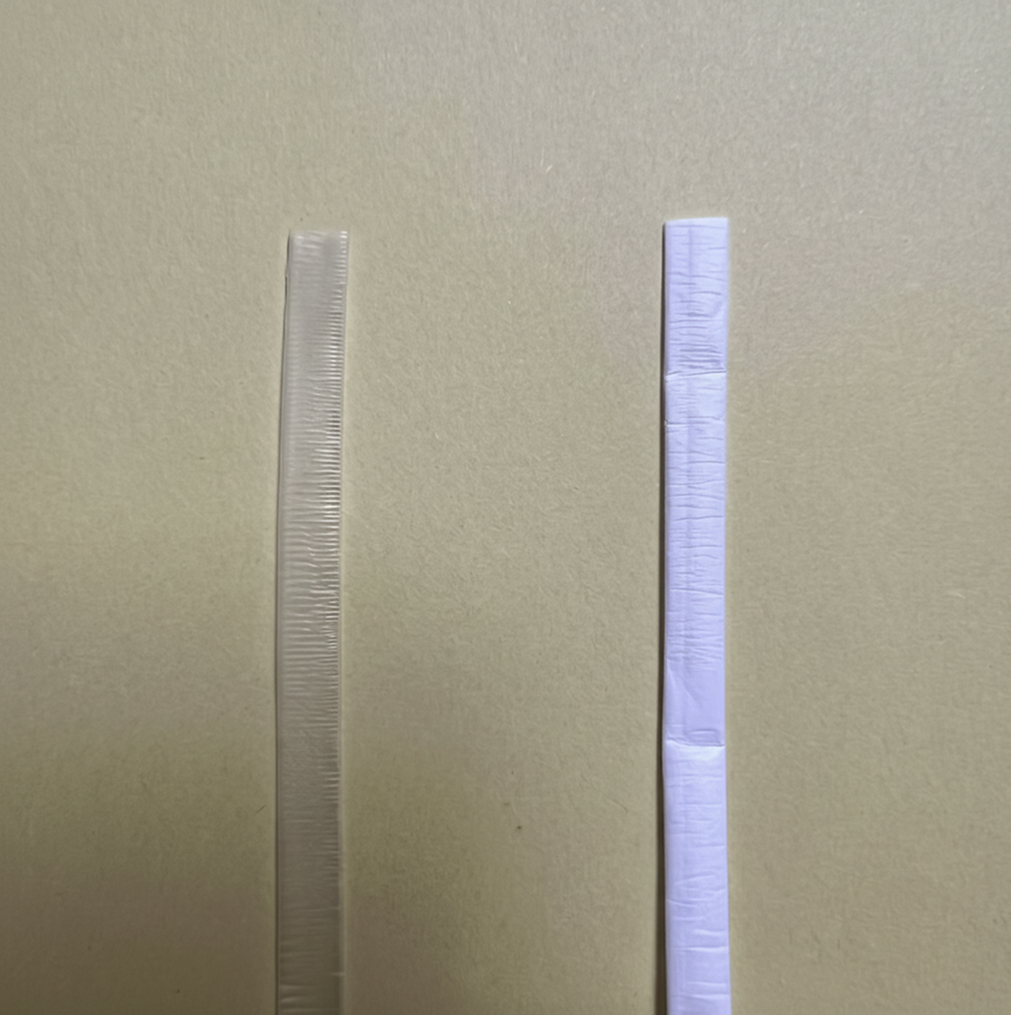
What the liner does
Braided and coil catheters are built as liner – reinforcement – jacket. The liner is the path for guidewires and stent delivery systems, so it needs low friction, a 0.025–0.04 mm wall, and it must stay bonded to the jacket after reflow. PTFE has met all three most cheaply.
What changed — PFAS
PTFE, FEP, PFA and ETFE are all fluoropolymers — PFAS. The 2023 ECHA restriction proposal is still debating a medical-device exemption, but global device makers are already asked to reduce fluoropolymer content in new designs. Inquiries reaching Korean makers read like “can we buy UHMWPE liner samples to meet PFAS regulation?”
Comparison
How to run a substitution review
- 1. Write down the current PTFE liner ID · wall · length as is. Inch specs (e.g. ID 0.094″ · WT 0.002″ · L 80″) are accepted as they are.
- 2. Get UHMWPE samples in the same size and run your existing reflow. Jacket bonding and ID change are the first things to check.
- 3. Measure guidewire and delivery-system passage friction side by side with the PTFE-liner shaft.
- 4. Biocompatibility data differs by grade, so request documents before freezing the design.
One UHMWPE liner sample spec is published. Send the size range you need and we confirm the feasible range with Linstant. A UHMWPE + TPU material for long-term implants has been co-developed with DSM since 2025.